

I don’t have an American flag. I’ll stand for the Pledge of Allegiance but I don’t say the words. For me the Fourth of July means our dog is going to be scared by fireworks, nothing more. I’m proud to have never served in the military, having gotten a high lottery number in Vietnam War days.
Yet I consider myself patriotic.
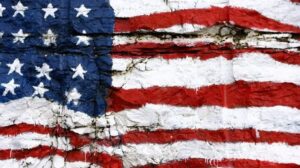
Not because I think the United States is the best country in the world. Because I love our country in spite of its many flaws. Which I’m confident is how non-Americans view their own countries: they love India, Brazil, France, or wherever because that’s their home, and home is where the heart is.
There’s a lot to like about the United States. We’re an energetic, dynamic, creative nation. Not when it comes to our federal government in the age of Trump, unfortunately. But otherwise. I’m embarrassed for our country every time Trump opens his mouth to spread more hatred and lies when he’s overseas.
However, in the big picture of history, before too long Trump will be a minuscule fragment. He’ll be remembered as our most corrupt and incompetent president. Otherwise, he’ll soon be forgotten as his disastrous policies are undone by presidents who actually care about making life better for people both here and around the world.
Trump won’t succeed in rewriting the story of America. He doesn’t have that power, even though his pathetic attempts to make himself the centerpiece of our nation’s 250th anniversary are studiously ignoring the truth about the United States.
Here’s excerpts from a recent New Yorker article by Arthur Krystal, “How Problematic is Patriotism?” I’ll also share the full article as a PDF file.
How Problematic Is Patriotism? | The New Yorker
In Trumpworld, America has been given a bad rap, yet Trump has spent years slandering the country himself. In March, he issued an executive order asserting that a “revisionist movement” has sought to rewrite American history, portraying our “unparalleled legacy of advancing liberty, individual rights, and human happiness” as “inherently racist, sexist, oppressive, or otherwise irredeemably flawed.”
Not so fast, Mr. President. Ours is a complicated history, made more tortuous by race. Some five hundred Indigenous nations lived here before the first enslaved Africans arrived, in 1619—a year before the first Pilgrims. That, too, is American history, along with Reconstruction, Jim Crow, segregation, the Great Migration, Black anger, Black humor, and Black culture. This isn’t wokeness; it’s fact.
Trump’s America has the virtue of simplicity: no initial divisions; no loyalists and patriots, or Native peoples and settlers, or Federalists and Anti-Federalists. He’s not bothered by labor unrest, unfair imprisonment, white-nationalist undercurrents. Imperfection is for losers, and America is a winner. It had to have been great in the past—otherwise, how could Trump make it great again? After returning to office, he swiftly reinstated the 1776 Commission, to cleanse schools of “anti-American ideologies” through “patriotic education measures” that will instill “a patriotic admiration for our incredible Nation.” In practice, this essentially means learning to forget.
When the bipartisan Citizens Coinage Advisory Committee, in 2024, proposed designs for three two-hundred-and-fiftieth-anniversary quarters commemorating the abolition of slavery, women’s suffrage, and the civil-rights movement, the Treasury Secretary ultimately brushed them aside. Of course he did. Trump is selling an alternative America, with the messiest chapters abridged or excluded. Give him enough leeway and we’ll soon see a return of the mint-julep histories popular a century ago, which found no room for the Black Americans who’d fought for this country.
…Not everyone has to see America the same way, but amnesia about its history makes us easy prey for people who trade in ignorance. Is the Constitution perfect? Far from it. “We the People” meant the signers—not women, not the poor, not the uneducated, not the enslaved. In 1788, political standing belonged almost entirely to white men with property, money, or schooling.
Nonetheless, within the context and the limits of their moment, the Founders did something remarkable. They gave us a framework intended “to form a more perfect Union, establish Justice, insure domestic Tranquility, provide for the common defence, promote the general Welfare, and secure the Blessings of Liberty to ourselves and our Posterity.” Forget the word “patriotism.” Read the Framers’ words a few times and be grateful that they’ve succeeded as well as they have.
Discover more from Salem Political Snark
Subscribe to get the latest posts sent to your email.