

Let's get this clear right off the bat. I'm not an economist. Heck, I've never even had a college economics class. But I've got a pretty good sense of when an economic sales job appears to be B.S., or to put it more delicately, taken with a grain of salt — meaning, skeptically.
That's the feeling I have whenever I hear boosters of the Salem airport having commercial air service speak of the economic benefit to our city from having an airline fly in and out. Salem hasn't had any success in keeping an airline for more than a few years.
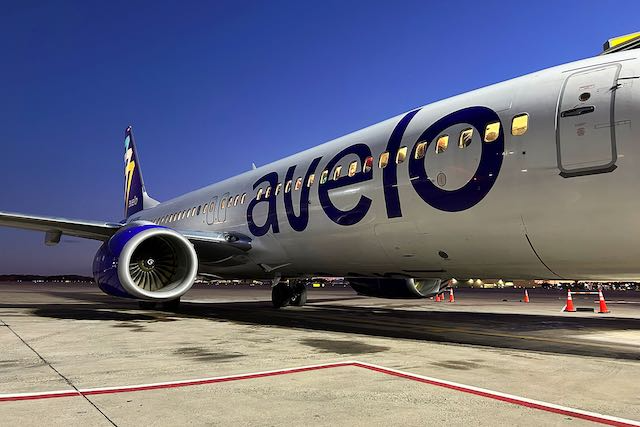
The most recent example of this happening was when Avelo Airlines said goodbye to Salem this month after less than two years of providing service to 1-3 locations, ending up with just two: Las Vegas and Burbank. Now Travel Salem and a provider of fuel at the airport are already trying to talk the city council into forking out additional millions of local money to subsidize a different airline.
I guess their favorite movie must be Groundhog Day, because these guys are addicted to trying the same failed airline recruitment strategy over and over again.
On August 18 the City Council held a work session on Air Service Update, the future of commercial air service in Salem. Part of the materials shared in advance of the work session were a detailed report by city staff, and a slide presentation by Volaire Aviation Consulting.
What caught my eye in both documents was the claim that during the time Avelo Airlines served Salem, the economic impact was $32.5 million. Here's why that number seems dubious to me.
I'll just share my concerns in a brief fashion. My hope is that city councilors and city staff will look into these concerns and either rule them out as unfounded, or take them as reasons to be skeptical about the Volaire estimate.
(1) It's claimed that there was an average of 91 new visitors a day coming to Salem. I have no idea what that "new" means. I deeply doubt that there's data on each arriving passenger about whether this is their first visit to Salem.
(2) The new thing is important because some visitors surely have a connection here. Maybe they have relatives in the area and are visiting them. In that case they probably will stay with those relatives, which reduces their economic impact via hotel stays and dining out.
(3) I've been unable to learn what the Volaire economic impact analysis methodology is. There's no mention of this on the Volaire web site, other than a general description of what they do. So I did some Googling of aviation economic impact analysis in general.
(4) I found a 2012 Walla Walla airport study that contained an appendix of the methodology. This section was of interest:
Calculating Impacts from Visitor Spending. Tax revenues from visitor spending are based on the direct visitor spending numbers estimated for each airport. The benefits associated with each airport are not necessarily received by the county or city where the airport is located, because travelers flying into an airport may take additional ground transportation to their final destination.
(5) So even if the $32.5 million figure is correct, and I doubt that it is, there's no way to know where it was spent, because some of the visitors who arrived at the Salem airport went on to other destinations, such as the wine country near Portland, or the Oregon coast. There's no way all of that money was spent in Salem.
(6) Further, all of the Salem residents who flew to Las Vegas and Burbank spent some of their money in those locations. Money spent in a casino or Disneyland obviously no longer can be spent in the Salem area. Did Volaire take into consideration the lack of spending locally by residents who visited other places via Avelo Airlines? I doubt it.
(7) The Volaire slide presentation says that only 2% of Salem catchment area residents flew out of the Salem airport via Avelo Airlines; 72% flew out of Portland; 24% flew out of Eugene; and a few percent flew out of Seattle or another airport. One must assume that the reverse is roughly true: most visitors to Salem arrived here through the Portland or Eugene airports, since Avelo only had flights from Las Vegas and Burbank, and most visitors would live elsewhere.
(8) Thus it is virtually certain that if Salem didn't have commercial air service at the Salem airport during the time Avelo Airlines operated here, most of the $32.5 million estimated economic impact from visitors would still have occurred via those visitors arriving via the Portland and Eugene airports.
(9) Which means it is absurd to claim that Salem got a giant return on investment from the several million taxpayer dollars pumped into the Salem airport by the city council. Most of that return would have happened anyway by visitors to came to Salem via a different airport. And remember: there's no way to know where visitors who arrived at the Salem airport ended up. Many had a final destination elsewhere in Oregon, so that $32.5 million really should apply to the entire state, not just Salem.
Discover more from Salem Political Snark
Subscribe to get the latest posts sent to your email.