

Last night the City of Salem held a second open house on the Downtown Streetscape project.
I came away enthused about emerging ideas for improving the downtown area, but in an advance post about the meeting the Breakfast on Bikes blogger encapsulated the Big Problem with this project:
The second Open House for the Downtown Streetscape project starts tomorrow, Tuesday the 13th, at 5:30pm.
The project team hasn't published any new materials, so there's not much to say yet – other than to continue to push the City for changes to carspace. Until we grapple with the disproportion and zoominess of carspace downtown, our fiddling with the sidewalks will be cosmetic, principally rearranging the deck chairs. This may yield incremental improvement, but it will not yield the enduring, structural change we need.
A secular Amen to that!
Below you'll see photos of part of the slide presentation made by the Walker Macy project consultants, plus photos of the boards scattered around the room where attendees could put orange dots to indicate what streetscape options they liked the most.
In my comments I'm going to focus on the "carspace" issue noted above, because the overarching problem with downtown Salem is the excessive amount of space devoted to three and four-lane one-way streets, which gives the Historic District an overly freeway'ish feel.
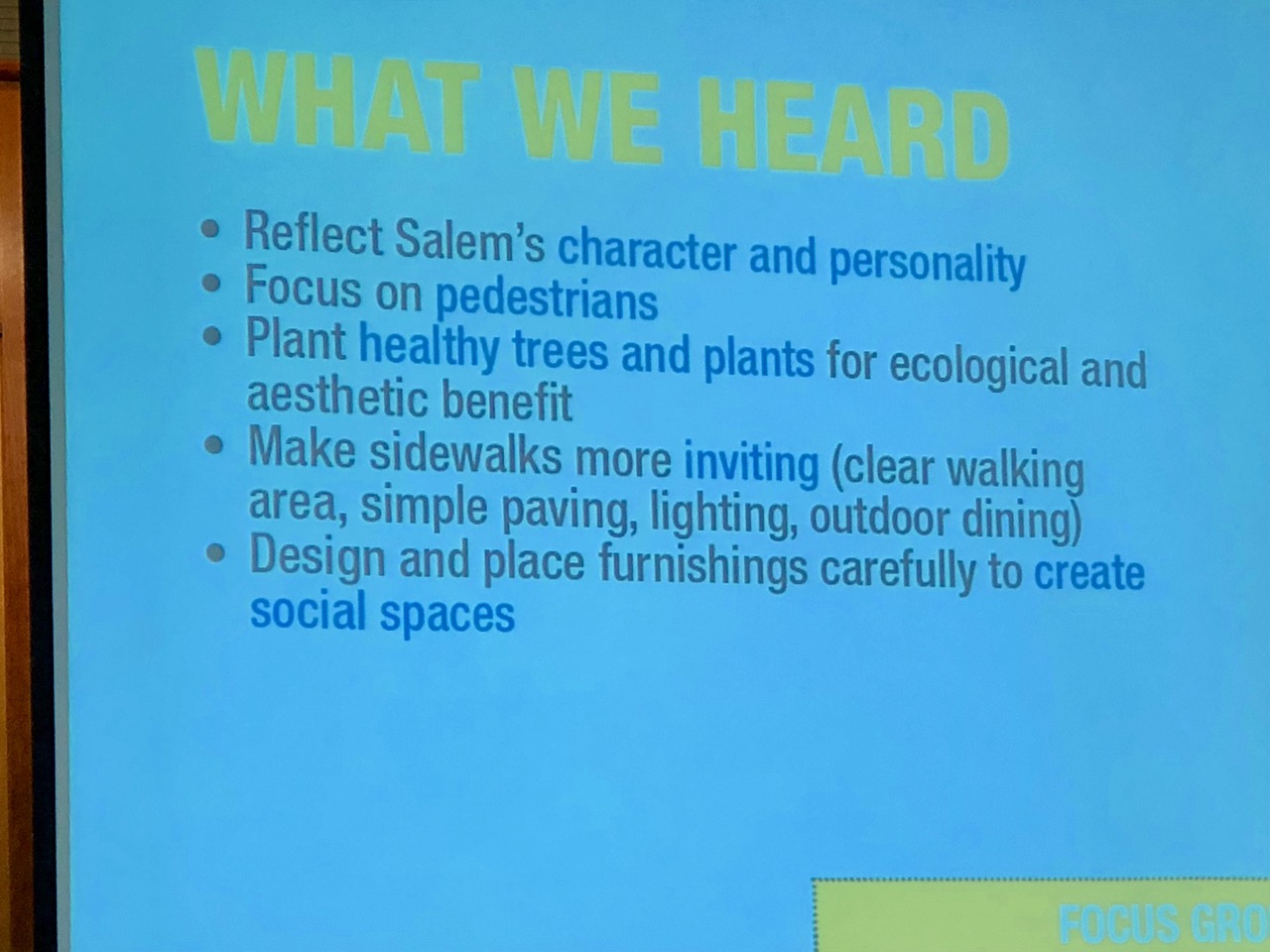
This slide shows some of the conclusions arising out of 90-minute focus group sessions held with people interested in various streetscape topics.
Note the "Focus on pedestrians."
Exactly nobody, from what I can tell, has said We want more cars downtown. After all, cars don't shop, eat at restaurants, or do any other of the things downtown offers. Only people on foot do, pedestrians. Yet as noted above, cars and the streets they drive on consume an inordinate amount of downtown space.
Otherwise, the recommendations speak for themselves. They seem rather obvious, but there's nothing wrong with pointing out obviousness, since often simple good ideas fail to get the attention they deserve because they're, well, so obvious.
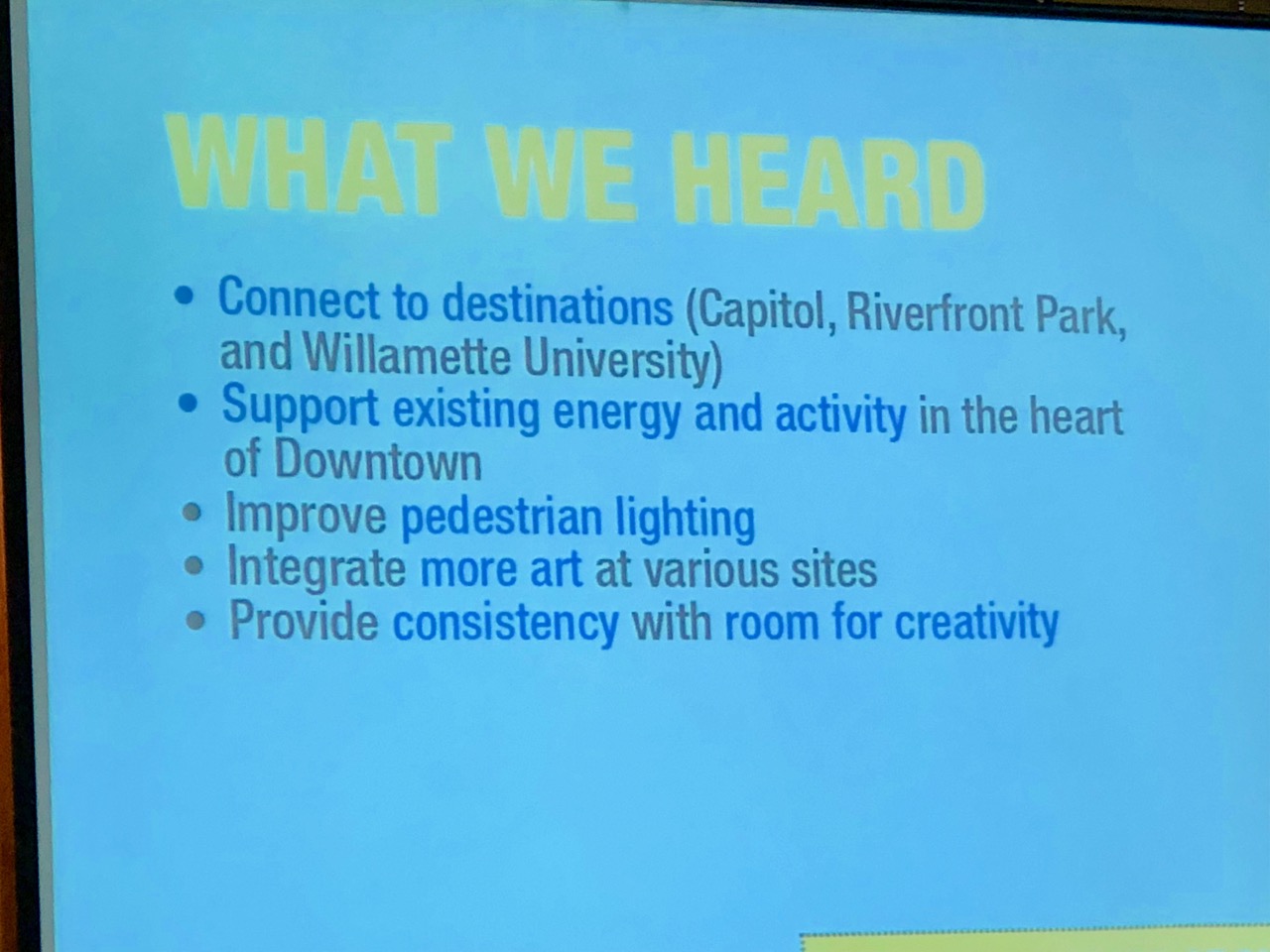
Here's more of what the consultants heard. Consistency is a point worth emphasizing. There's a mash-mash of benches, trash cans, tree grates, and such on downtown sidewalks. Creating a consistent look would go a long way toward making the area more attractive.
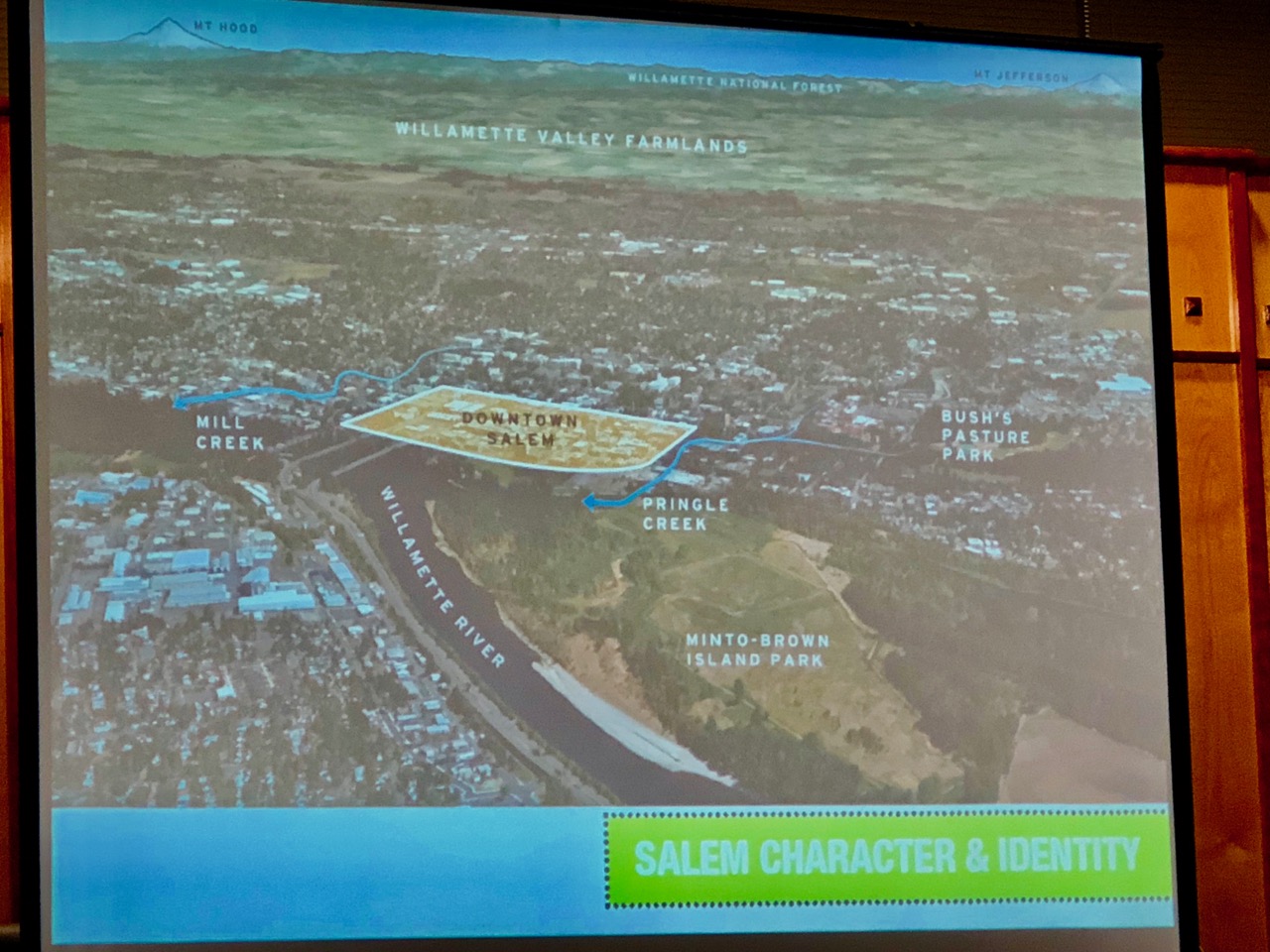
This slide was used to show Salem's connection to highly productive farmland and beautiful natural areas. Not surprisingly, the consultants said agriculture and nature should be reflected in downtown streetscape themes.
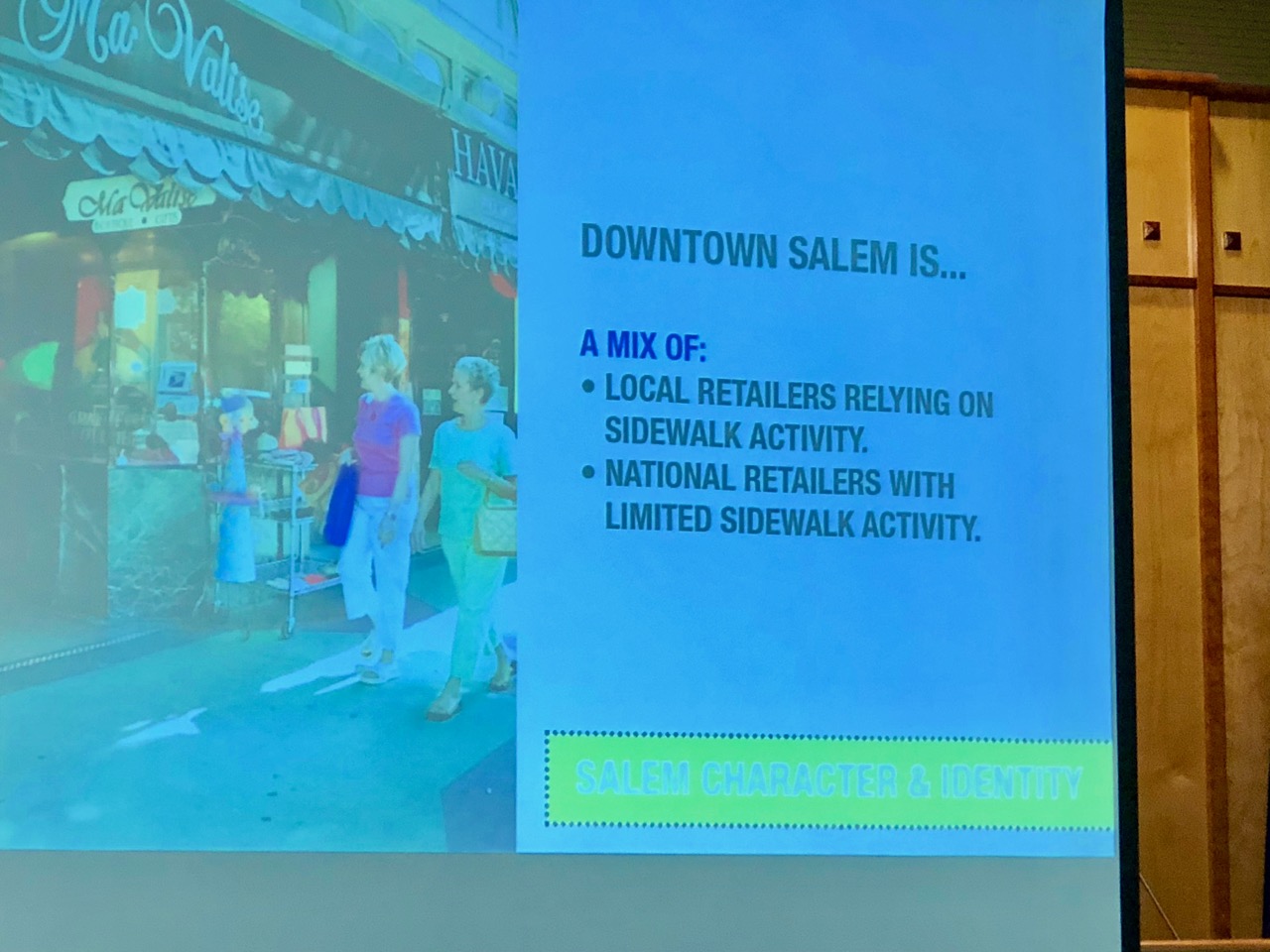
Here's another obvious point that is good to keep in mind. Local retailers rely on sidewalk activity, while national retailers need limited sidewalk activity. So putting pedestrians front and center above vehicles is going to help local businesses most — which should be the streetscape goal.
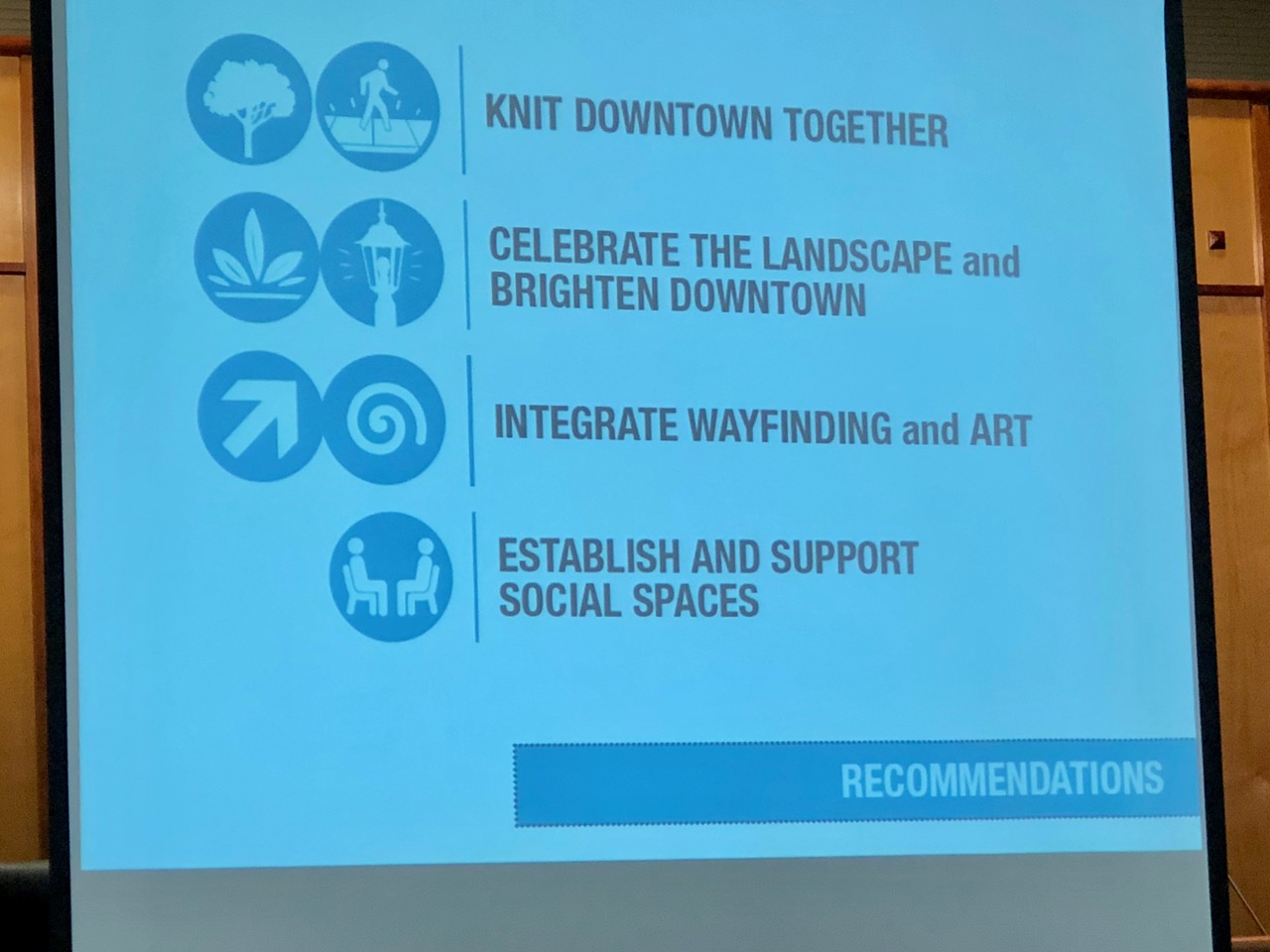
These are the four themes that arose out of the first phase of the Streetscape Project. Some specific streetscape examples are more interesting than the broad topics, as shown below.
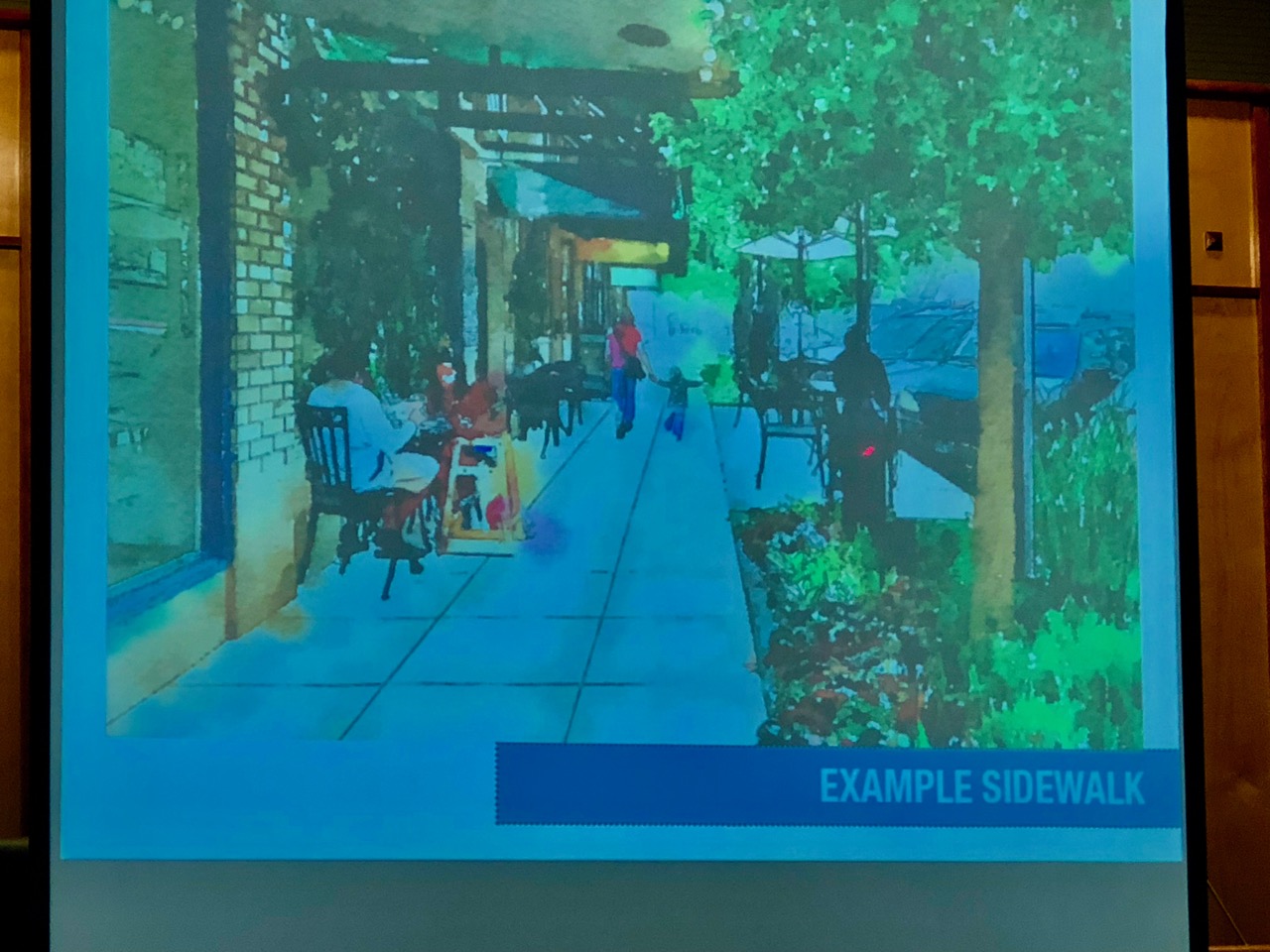
Here's an example sidewalk. It looks appealing.
There aren't any "sandwich boards" cluttering up the sidewalk, as currently is the case around Liberty and Court streets. Plantings provide a buffer between people and cars. Sidewalk table seating is adjacent to the business/restaurant, rather than next to the street. All good ideas.
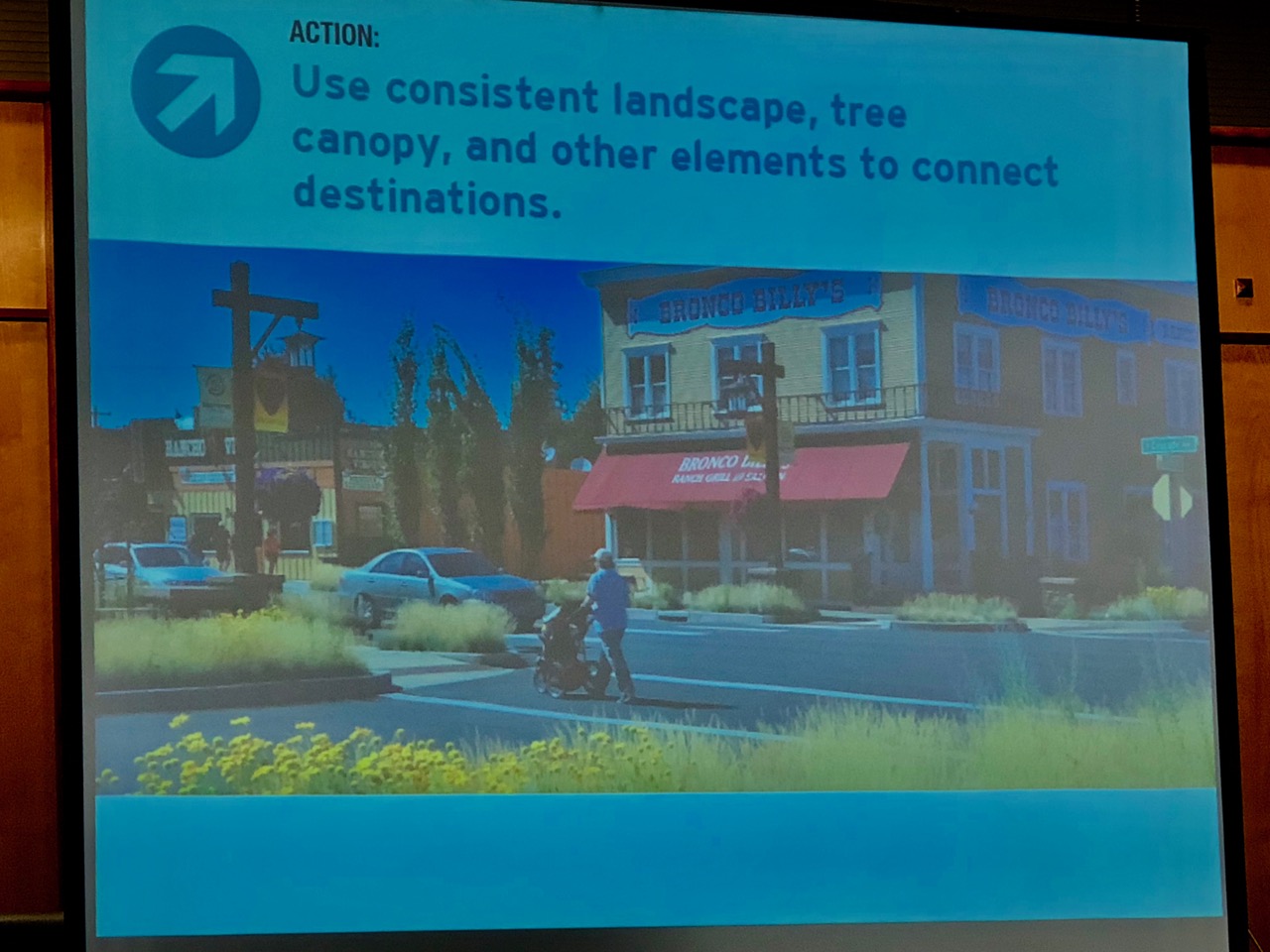
This slide is of Sisters in central Oregon, which recently had a makeover on its main streets. Natural plantings now make Sisters much more attractive. What the consultants didn't mention is that Sisters has two-lane, two-way streets, even though "Main Street" is a state highway.
Traffic crawls along at 20-25 mph or less, which makes being a pedestrian in this charming town wonderfully pleasant. Salem has a lot more to learn from Sisters than just its plantings. People flock to Sisters because it is people-friendly, not autocentric.
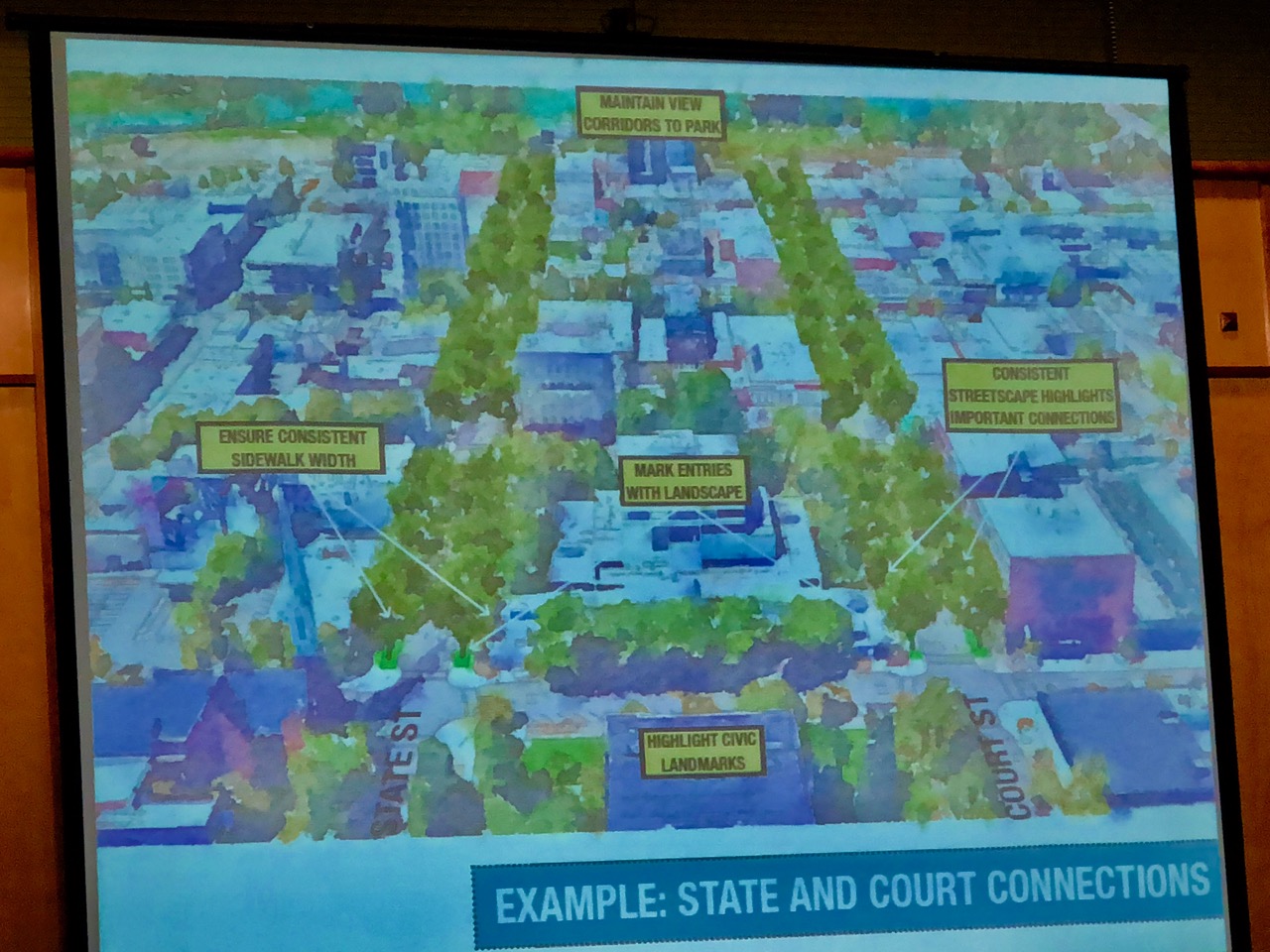
This slide shows how adding trees to State and Court streets creates a sort of natural connectivity between downtown and Riverfront Park to the west, and the Capitol/Willamette University to the east.
Of course, when I saw this image I couldn't help but think of how City officials allowed the five large, beautiful, healthy Japanese Zelkova trees to be cut down for no good reason in 2013, after the Public Works Director, Peter Fernandez, made an outrageous backroom deal with the U.S. Bank president, Ryan Allbritton, to have the trees removed.
(Yeah, I've mentioned this before on my blogs, and I'm going to keep on mentioning it until the City of Salem forthrightly addresses what Fernandez did, and makes sure nothing like this ever happens again.)
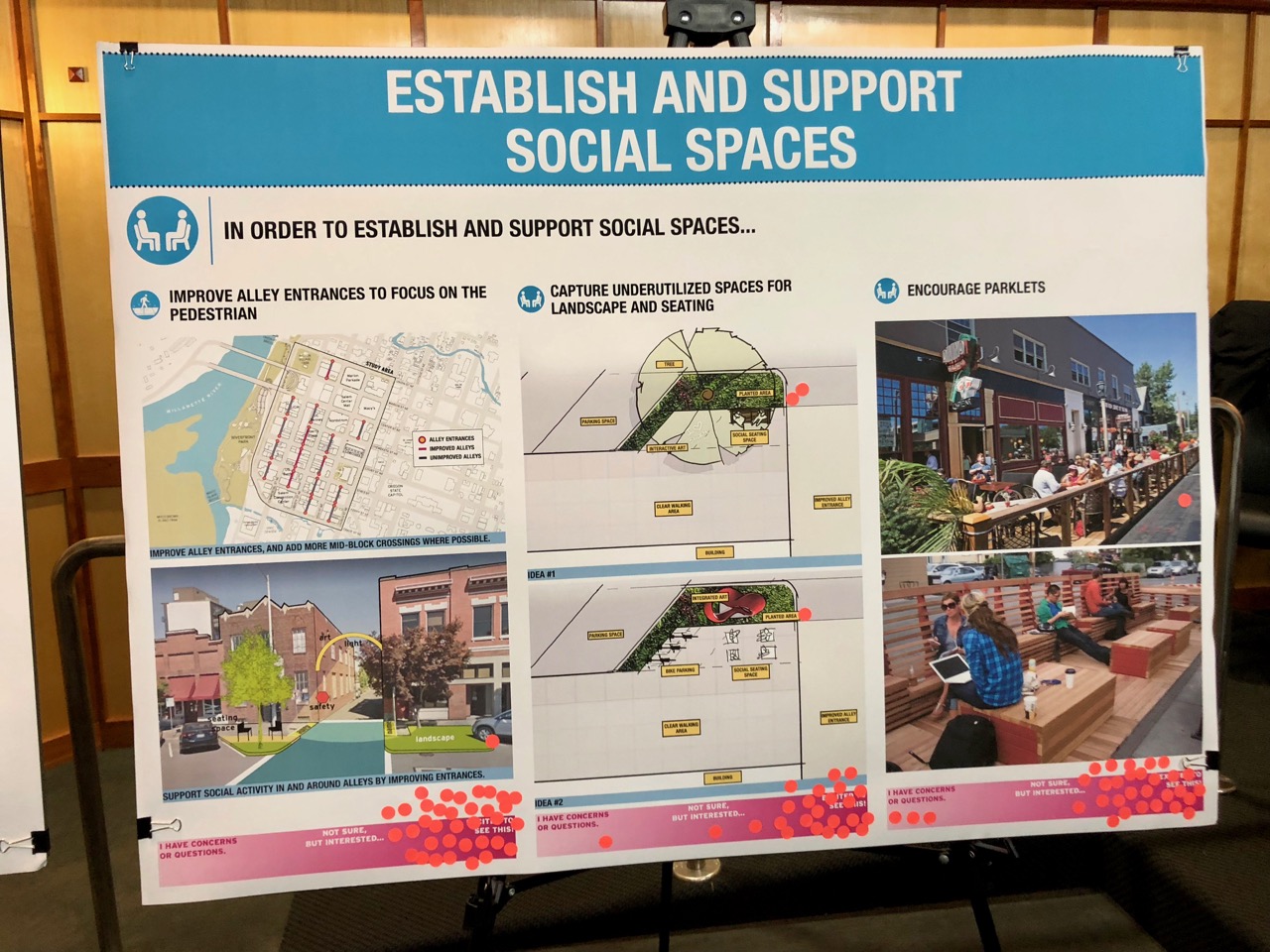
This board shows some Social Spaces streetscape examples.
You can see that each of the ideas got many orange spots on the "I like" side, aside from a few people who didn't like the idea of using some spaces for parklets. Note how many people can enjoy a few parking spaces that otherwise would have an empty car sitting in them.
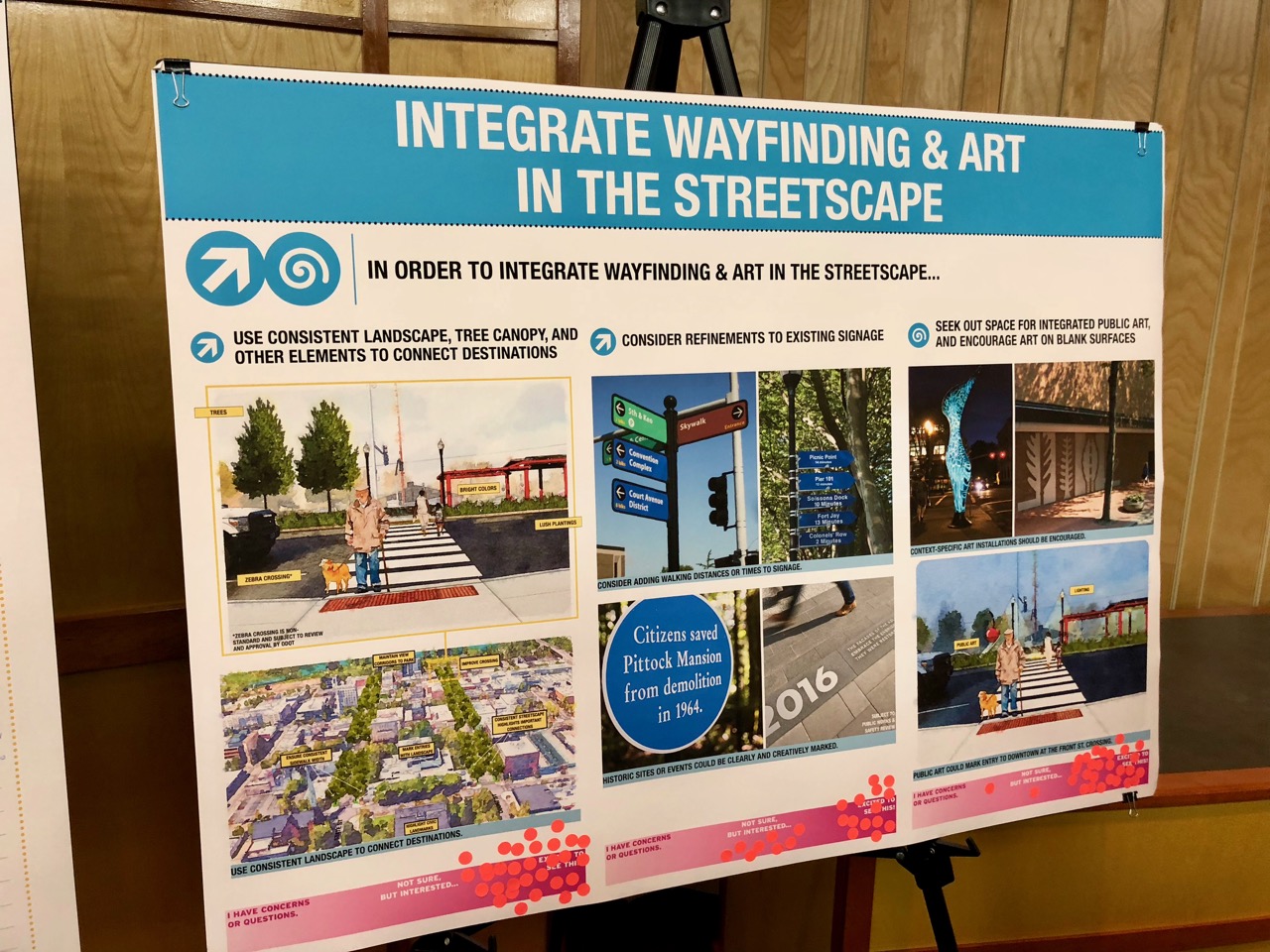
I like the rather quirky wayfinding signs already in downtown. Here's some ideas on the Wayfinding and Art topic.
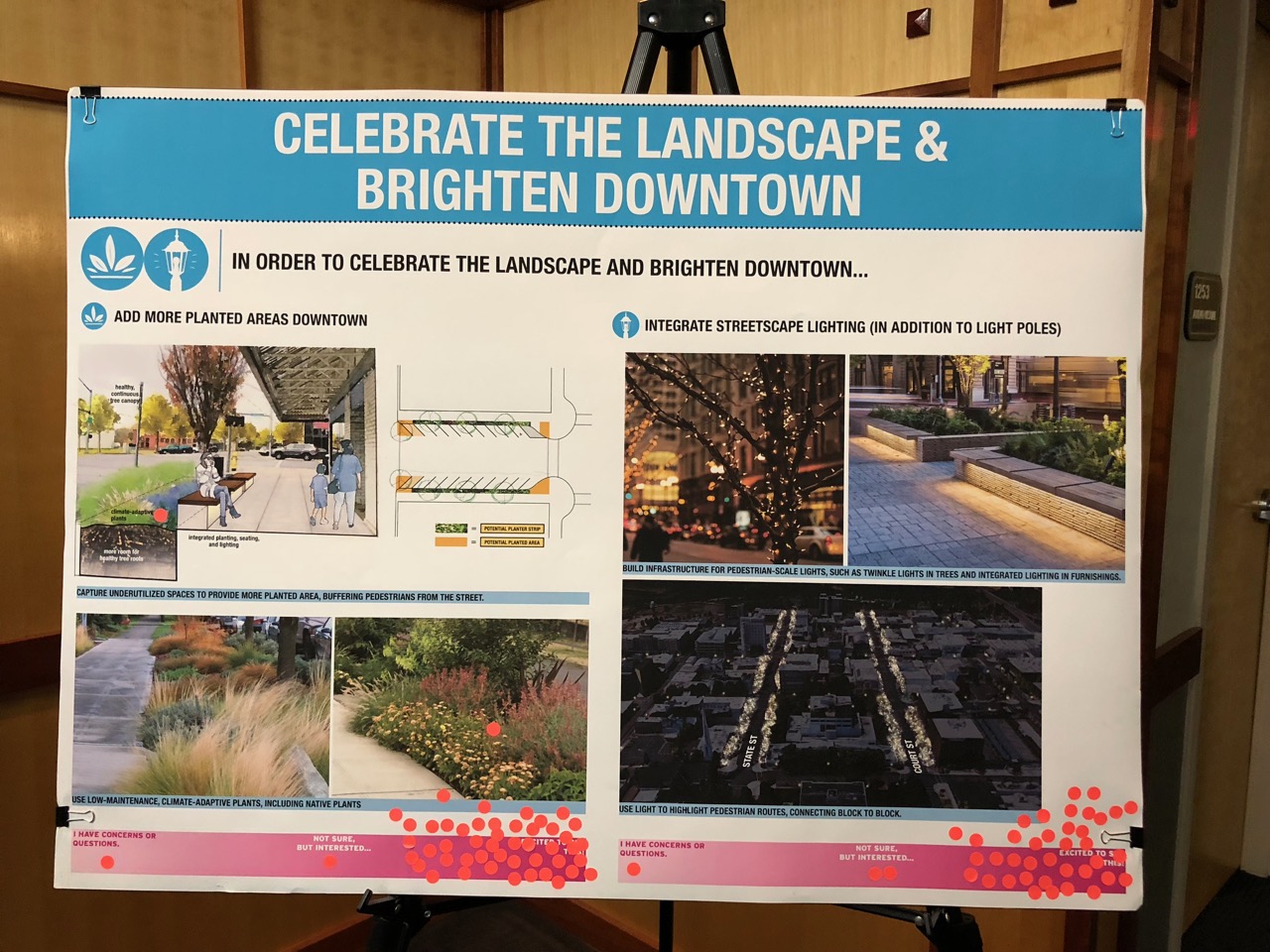
Having more planted areas and lighting downtown got a lot of sticker love. Again, that wide sidewalk in the image on the left would be much more feasible if more downtown streets were two-lane and two-way. Lots of plantings and lots of lanes work against each other.
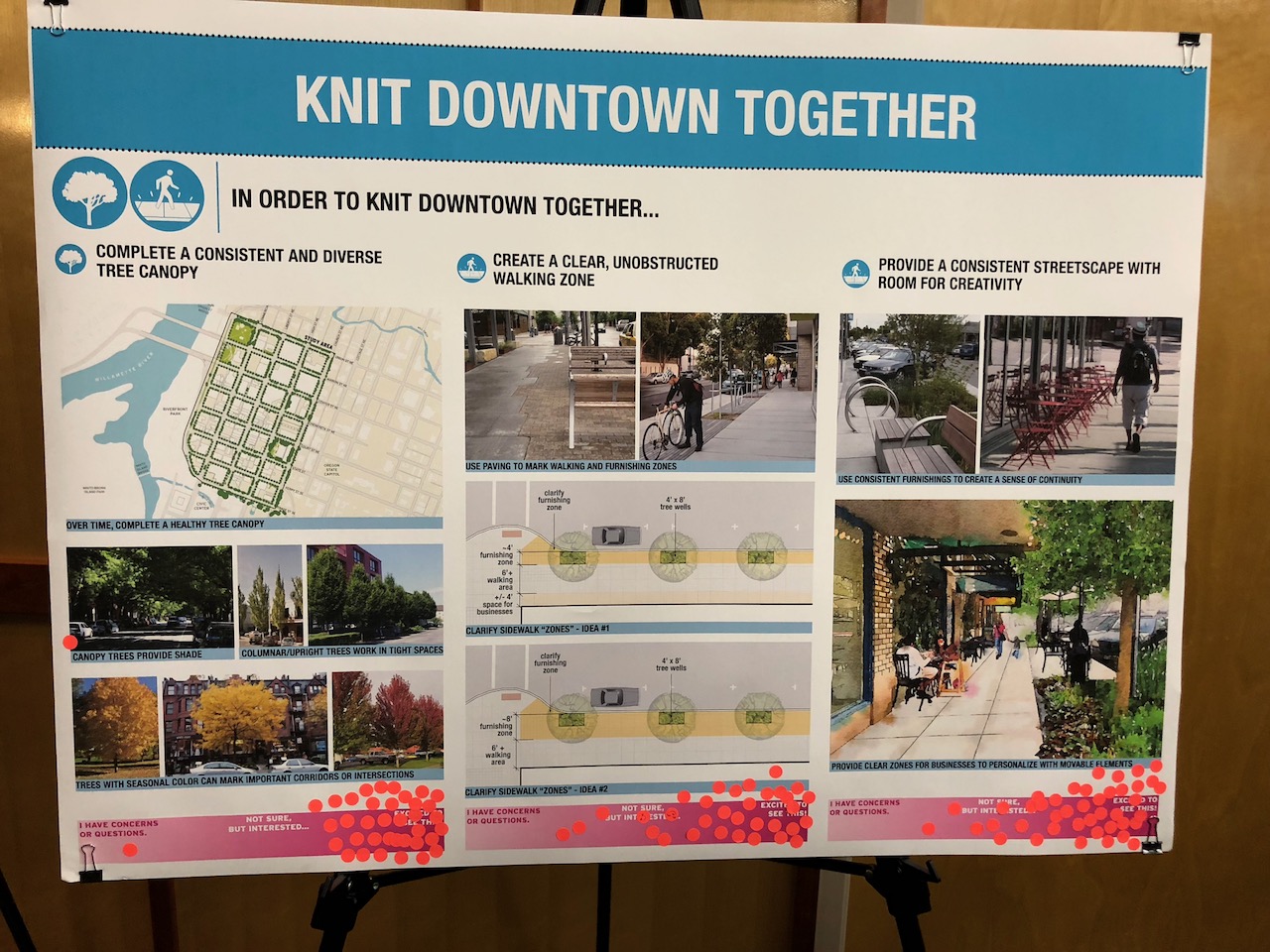
Here's the Knit Downtown Together board. Again, more trees, a clear unobstructed walking zone, consistency and creativity in the streetscape design. All laudable goals — which would be easier to achieve if the sidewalks were wider and the streets were narrower.
Discover more from Salem Political Snark
Subscribe to get the latest posts sent to your email.
Memo to Salem City Council: What are you waiting for? Your Public Works Director told you weeks ago that with the exception of Front, Liberty, Commercial, Marion and Center Streets that we could do whatever we wanted to calm streets and slow traffic and prioritize pedestrians in our downtown. Why wait? Take him up on the offer ASAP please.